
How I Spot SEO Content Trends

Table of Contents
SEO content trends
Happens almost every time, workloads and the fast paced flow of the digital world keeps us marketers from taking the time to actually spot new SEO content trends. What ends up happening is that we found ourselves joining a saturated topic, creating content that will get lost in seas of repetition.
The real skill isn’t knowing the trend — it’s seeing it early. On this article I’m gonna walk you through my own process and whats been working for me over and what changes have I adopted.
You’re reading the algorithm backwards
Here’s the first catch… The mistake of building content around last month’s data. Historical volume tells you what was popular. It doesn’t tell you what’s climbing. Your content planning shouldn’t be static, flexibility is key.
Key difference: Topic Trends = What’s popular right now vs Predictive Content = What could become a Topic Trend
My logic behind content planning revolves around 4 key classification pillars:
| Evergreen Content | Doesn’t expire. Builds authority over time and keeps working long after you publish it. |
| Topic Trends | High-volume, high-competition. Good for relevance, but you’re working with last month’s data. |
| Branded Content | Specific to your brand universe. Keeps your tone consistent and your audience anchored. |
| Predictive Content | The one most marketers skip. Getting ahead of the curve before the keyword has volume. |
These pillars work across all your topic clusters. I call them “Classification Pillars” since they decide the thinking behind planning, not the actual plan.
Juggling with Predictive SEO
Where do trends actually start? It’s going to vary depending on your industry, but Reddit, LinkedIn, and industry forums are great starting points. You’re essentially listening to real people talking about real problems — before those problems have a keyword attached to them.
Once I spot something worth investigating, my next step is detecting if it’s “Spike or Climb”:
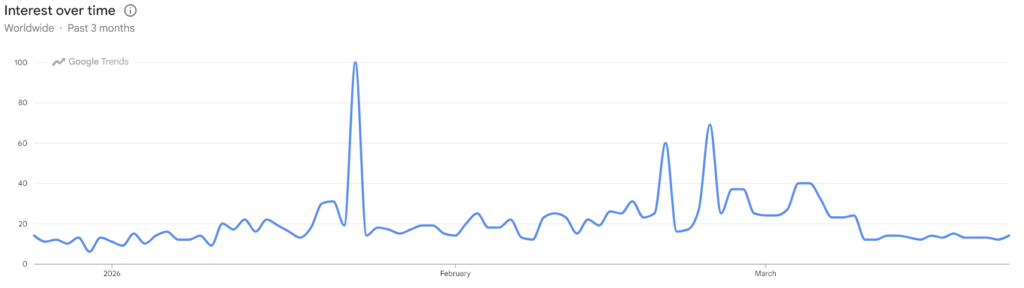
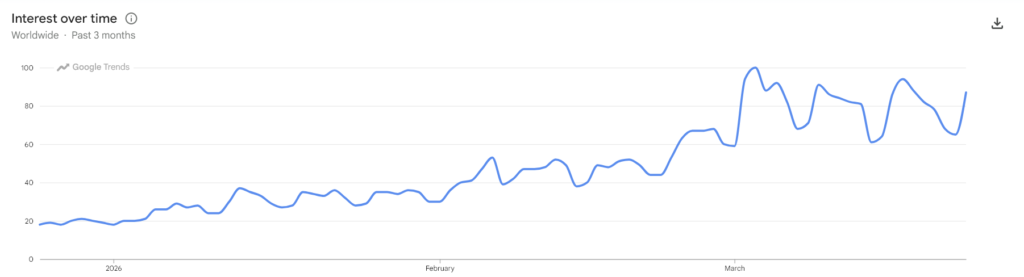
- Google Trends: Analyze keyword volume and frequency over a minimum of 3 months. You want a clear visual on consistency — what you’re looking for is an upward line, not a spike.
Here’s a clear example of what “spiked” content looks like. The keyword I searched was AEO — one of the most debated terms in SEO forums over the past few years. As you can see, this keyword spikes from time to time without sustaining momentum, which actually makes it a better fit for Evergreen content than Predictive content. It’s worth covering, just not worth chasing as a trend.
The second example is the keyword Claude. No paid promotion — but we were all there when Claude became the best alternative to ChatGPT following some controversy with the tool. This is exactly the kind of graphic you want to find. A sharp, sustained upward curve that started from near zero. That’s not a spike — that’s a climb. And if you caught it early, you had a real window to own that topic before everyone else showed up.
- Keyword platforms like SEMrush or Ahrefs: Here’s where I validate the trend with actual search volume, competition level, and related keywords. I know the trend but now it’s time to find my voice within it. This is what you might known as the “Value Proposition”.
So, does it actually work?
Not every predicted trend will land, and that’s fine. The goal isn’t to be right every time — it’s to build a process that keeps you ahead more often than not.
A senior marketer doesn’t overlook quick and reactive success; they nurture workflows and draw from experiences — whether negative or positive — to keep results growing steady.
When predictive content works, you’ll spot it in your views, backlinks from latecomers, and authority gains. Ironically, a measure of success are the “spikes” on your reports. Long term, with all your combined efforts, this becomes a steady growth line.
When it doesn’t, it still feeds your evergreen pile. A well-researched piece without a climb isn’t wasted — it just needs time.
The real win is building a curation habit. Here’s the flow I follow:
- Weekly: 15 minutes on each of your research sources — Reddit, LinkedIn, and Google Trends. Flag anything relevant.
- Monthly: Run your flagged keywords through SEMrush. Check if the trend is holding, growing, or already peaking.
- Quarterly: Review your predictive content performance. What ranked? What didn’t?
Treat it like a pipeline, not a one-time research session. Consistency!
